Drainage systems
Guiding water,
without a trace
We know how to do that!
With Caleyda®
Enabling drainage with predictable biodegradation
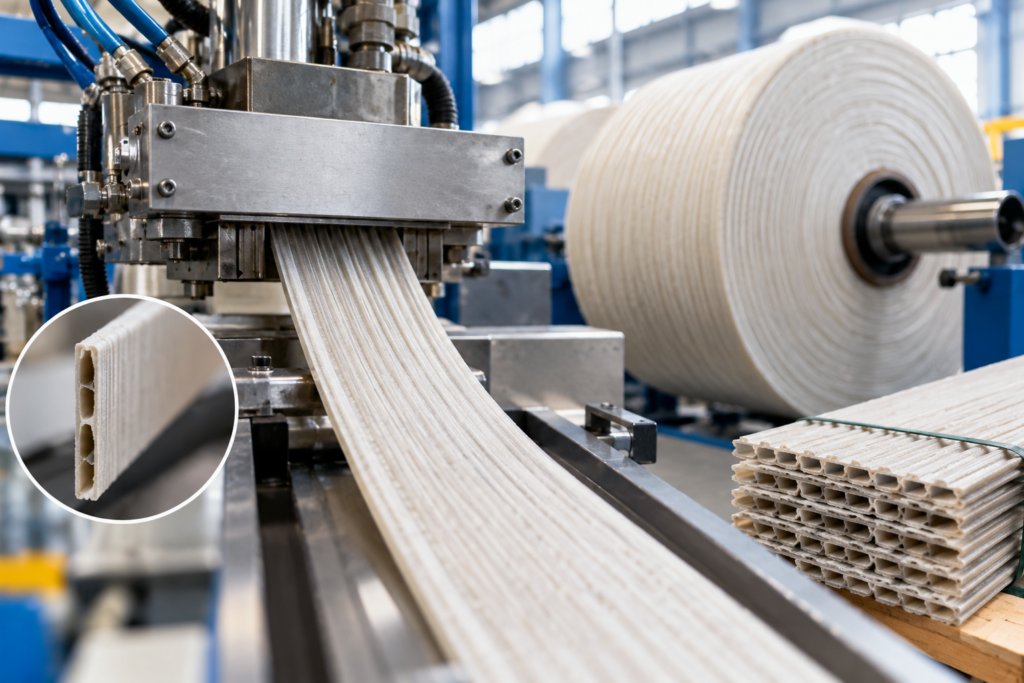
Drainage pipes are used to remove excess water from the soil and regulate groundwater levels in agriculture, horticulture, and civil engineering projects. Today, they are typically made from conventional plastics that remain underground after installation and are rarely removed at the end of their service life. Caleyda offers a biodegradable alternative, enabling drainage solutions with predictable biodegradation behavior tailored to the required service life and environmental conditions.
Tailored Service Life
Ranging from 1 to 5 years, providing full functionality before biodegradation
Seamless Integration
With mechanical and processing properties comparable to conventional plastics
Tailored for Performance
Formulations can be adjusted to suit specific soil types or climatic conditions
The Soil-Safe Coating
Why Controlled-Release Fertilizers Need Caleyda®
Remy Jongboom explains why Caleyda®, produced from organic residual streams, is an excellent material choice. Caleyda® combines reliable performance, seamless integration and tailored biodegradability in one versatile solution.
From side stream to natural material.
A new, circular chain — powered by microbes instead of oil wells.
Second generation feedstock
We start with organic residual and side streams — resources that don’t compete with the food supply.
PHAenix® technology
Natural mixed-culture microbes feed on the streams and produce PHA, stored inside their cells as PHA-X®.
Caleyda® extraction
The biopolymer is gently extracted from the biomass through the Caleyda® Extraction Process.
Back to nature
After use, Caleyda® is recycled mechanically or biologically — biodegrading without persistent microplastics.
Processing methods
Innovative processing methods for biodegradable biopolymers
Extrude
Film, sheet and fibre extrusion on standard lines.
3D print
Filament and pellet printing with standard settings.
Injection mold
Rigid parts on standard injection moulding equipment.
Dispersion
Water-based coatings and binders for paper and board.
Fibre spinning
Melt-spun fibres for textiles, twine and nets.
Thermoforming
Trays and cups from extruded sheet.
Frequently asked questions
We let nature do the work.
During our PHAenix process, naturally occurring microbes produce a biopolymer (PHA) from organic residual streams. PHA is then used as the base for Caleyda®.
Unlike traditional plastics, this process uses no fossil resources, no genetic modification, and no harmful additives.
Caleyda® biodegrades in soil, fresh water and marine environments, as well as in industrial and home composting — without leaving persistent microplastics. Certificates follow as they are obtained.
Caleyda® is processed on standard equipment: extrusion, injection moulding, 3D printing and water-based dispersions. See our applications for examples, or contact us to discuss yours.
Questions about this application?
Our specialist is happy to talk about your process, your requirements and what this application can do for you. Call or send an e-mail.
Our partners
Polyurethane as a coating for fertilizers needs to be replaced with a biopolymer within Europe in 2028. And we know how to do that.
At Paques Biomaterials we have developed a new generation of materials.